

“An Uncommon Eye”: Reflections on the Life and Work of Sandy Shreve

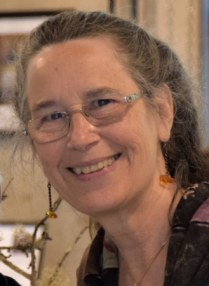
One of the first friends I made in the poetry world was Sandy Shreve. Despite our gap in age and experience, Sandy took in this wide-eyed budding poet as a peer. I remember one day walking with Sandy to her house near Vancouver’s Trout Lake and talking about a sentence in a poem. Sandy paused the conversation and asked, “Did you mean a sentence or a line?” and I realized I wasn’t sure. “It’s important, the difference,” she explained, then we went on talking. That was it, the whole lesson, but it shot right through me—I needed to think more precisely about my art if I was to love it properly. It was one of many lessons Sandy has taught me over the years about how to lead a fully engaged life in the arts.
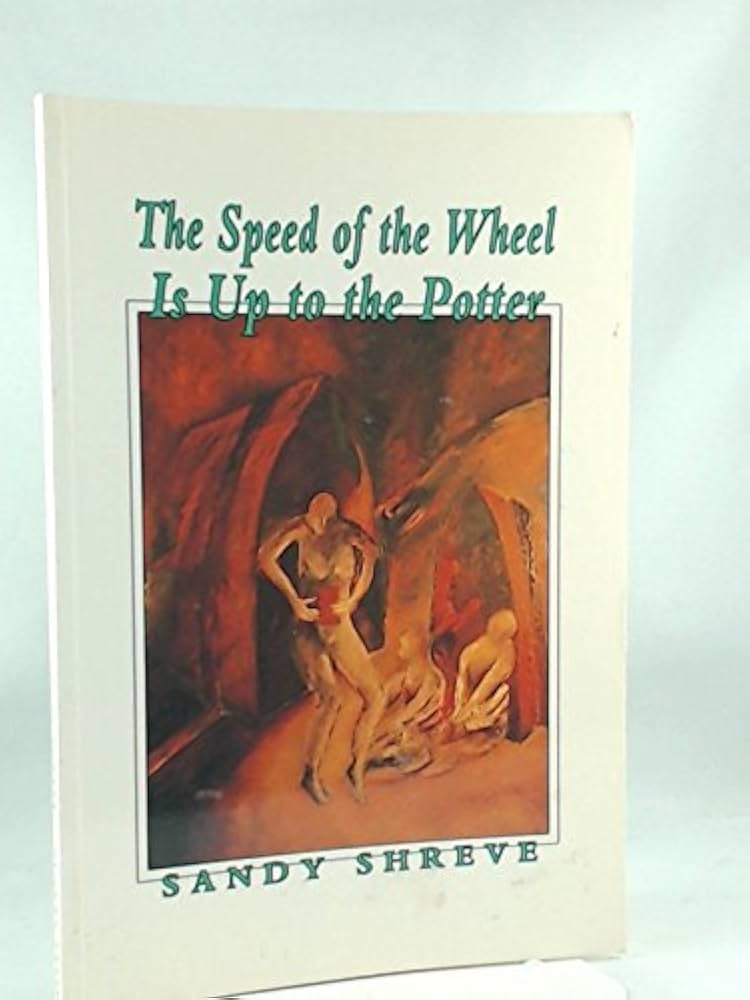
2025 marks the 35th anniversary of the publication of Sandy Shreve’s debut poetry collection, The Speed of the Wheel Is Up to the Potter (Quarry Press). Written while Shreve was a member of the Vancouver Industrial Writers’ Union, the book conveyed a “workaday world… rooted in the common grind and an uncommon eye for what gives it significance” (Ottawa Citizen). It also launched the career of a poet, visual artist, and arts organizer whose impacts would be felt across British Columbia and the country. We need look no further than a couple other anniversaries to see some of that impact:
2025 is the 20th anniversary of the publication of In Fine Form: The Canadian Book of Form Poetry (Polestar Press), a groundbreaking book Shreve co-edited with Kate Braid, which demonstrated how, and how richly, Canadian poets write in traditional forms (Robert J. Wiersema described the book, in Quill & Quire, as “a paradigm shift”). And 2026 will mark the 30th anniversary of BC’s Poetry in Transit, Canada’s longest running poems-on-busses series, which Shreve founded in collaboration with BC Transit and Books BC back in 1996.
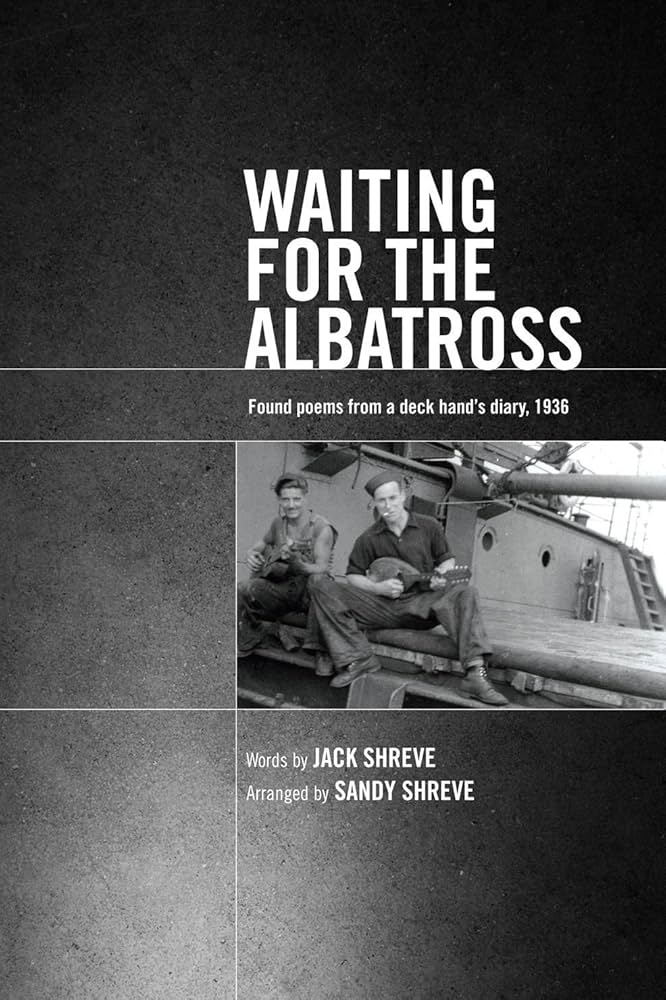
2025 is also the 10th anniversary of the publication of Shreve’s most recent book, 2015’s Waiting for the Albatross (Oolichan Books). That year marked a recalibration in Shreve’s artistic trajectory. In 2012, she moved from Vancouver, her home for 40 years, to Pender Island, and taken up photography. In 2015, at the encouragement of Pender artist Judith Walker, she began painting. What has followed is a decade devoted to the visual arts, which has shown the wide range of what that “uncommon eye” can see. Shreve’s decade of publishing silence has also meant younger writers and readers may no longer be aware of her work, or the legacy of her books and community organizing on the landscape of Canadian poetry and art.
To celebrate this abundance of anniversaries, and with the enthusiastic support of fellow poet Kate Braid, I asked some of Sandy’s colleagues in the worlds of writing and visual art to say a few words about her impact on their lives:
Tom Wayman, Poet, Author and Co-Founder of the Vancouver Industrial Writers’ Union
I first knew Sandy through her participation in the Vancouver Industrial Writers’ Union (VIWU), which she enhanced with her sharp critical eye and impressive organizational skills. Sandy brought to the work writing movement a down-to-earth, let’s-tackle-whatever’s-needed-to-get-this-task-done approach I’ve always attributed to her Maritime (Sackville, NB) roots. VIWU between 1979 and 1993 functioned as a writers’ circle—members sharing work for feedback—as well as a participant in and organizer of public author readings (in venues from coffee houses to the Vancouver Folk Festival) in addition to producing two poetry anthologies and recording one audio cassette together with the musical group Fraser Union.
Sandy’s own poems both illustrate and illuminate her work world. In “Mental Cruelty” she captures how bosses discussing a job without talking to the person employed to do it—in this case, in a library—infantilize employees. In “White Out,” from Sandy’s years as a clerk-typist, the narrator contrasts her frenzy to meet deadlines with her supervisor’s comment that her employment is a snap compared to his since, according to him, she just has to “sit all day and copy / someone else’s work.”
Yet Sandy’s stark awareness of power relations, of how holding most jobs requires obedience to unelected authority, doesn’t mean the poet is blind to complexities. In “Grievance Procedure,” arising from an incident from Sandy’s union involvement, the narrator is “listening to / a woman worried— / the harassment’s there / though often so subtle / it evades articulation.” The woman who has gone to the union doesn’t want to file a grievance. “And yet she grieves,” leaving the narrator’s office garbage can, containing used tissues, “an archive of pain.”
Perceptive vision and outspokenness have never left Sandy devoid of hope for the future. In “Quilting Bee” she speaks of “the female / job ghetto.” The “[d]ays and nights / fragmented” by living this work are seen “as if / we were collecting shreds / of time / for a fabulous quilt.” It’s a quilt that the women “[m]ight just one day / sew… up into something // they claim can’t be made.”
Sandy’s literary accomplishment and significant involvement with work writing seem to me to flow from her ability to unflinchingly see, and capture in verse, aspects of the working life. She does this while neither having unrealistic political expectations nor losing her belief that creating a better world—and art that can assist in the making of that world—is possible. Sandy’s fearlessly honest poems constitute a model to aspire to, and a lasting encouragement to speak clearly and accurately about what happens to and around us.
Barbara Nickel, Poet and Author
“Your poem has brought me to tears on the bus!” a reader wrote to me. Another time, my son texted a photo of my poem via his childhood friend, now a UBC student, who was surprised and excited to find my lines travelling the Vancouver streets with him. How many other connections unknown to me have sprung between my work and transit readers? Multiply these by the hundreds of other poets whose work over the years has been brought to readers across the province courtesy of BC’s Poetry in Transit program. I’m amazed, and grateful to her for this tremendous gift.
Rereading a “How Poems Work” essay Sandy wrote on my poem “Busking,” for Arc Poetry Magazine, I’m reminded of the way Sandy reached into a sonnet of mine and pulled out insights and allusions that even fifteen years later surprise me once again. I had written the poem at the beginning of my life as a poet. With her wisdom and experience, Sandy’s deep reading gave it back to me just as she was peeling back its layers for other readers.
As a children’s writer as well as a poet, I was surprised and pleased that Sandy and Kate included two of my children’s poems in the second edition of In Fine Form. The kind of curiosity and openness to new forms regardless of age categories is typical of their inclusive approach. Sandy brings to projects a spirit of collaboration. We were booked together for a library reading and instead of individual reading blocks, Sandy had us weaving our poems together in an image sequence which engaged the audience and gave a fresh lens on our poems. I’m so grateful for Sandy’s inspiring vigour and generosity!
Zoë Landale, Poet and Author
One of the things that’s remarkable about Sandy Shreve is her grace under pressure. In the past five years, she’s dealt with more than any of us would want to face, huge health issues for herself and then the same for her husband, Bill Twaites, who passed away a few months ago. Yet, when I call Sandy and ask, “How are you?” she’ll say, “Fine.” She doesn’t complain.
I’ve known Sandy for decades; we were in The VIWU together. Sandy’s always been curious. She’d ask questions like, “Why does this work?” I especially remember this around form poetry, and of course she and Kate Braid wrote the Canadian textbook on this.
Sandy makes a mean moussaka, she’s the Cookie Queen, and she bakes fine pies.
When Sandy and Bill moved to Pender Island, where I live, some years ago, it was obviously time for my late husband Garney and I to throw a dinner party and invite them to meet all our friends. Sandy and I watched with delight when Bill and Garney clicked and started going out for coffee in the mornings.
Another thing that’s notable for me about Sandy is her dedication to artistic practice. I love it. I’ve watched with admiration and awe as she switched from writing to visual art, and, despite medication side effects and endless trips to Victoria for cancer treatment, just keeps on painting. The studio is her happy place.
Thomas Edison said, “Inspiration is the application of the seat of the pants to the seat of the chair.” Sandy has done this in her life joyfully!
Kirsten Emmott, Poet and Author
I consider it a privilege to have worked with Sandy Shreve, especially in my time as a member of the VIWU, where her thoughtful criticism was a guiding light during our workshop sessions. I was delighted to be a contributor to In Fine Form, the anthology she co-edited. She has continued to impress me with her published work, and I admire her painting very much. She was her warm and welcoming self at a recent reading on Salt Spring Island, and it was wonderful to see old friends again.
Judith Walker, Painter
From the time she was a youngster, Sandy loved the smell of paint that emanated from Owens Art Gallery at Mount Allison University. She grew up always hoping to create visual art but chose the written word until we met in my introductory painting class a number of years ago. She remembers I said encouragingly, “You can paint, you have the eye.” I remember confidently saying, “You have all that poetry in you. You can paint.”
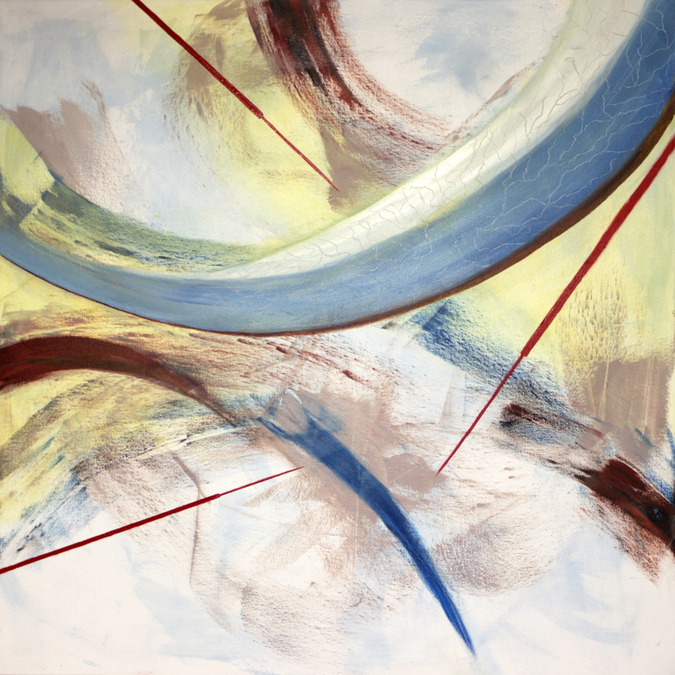
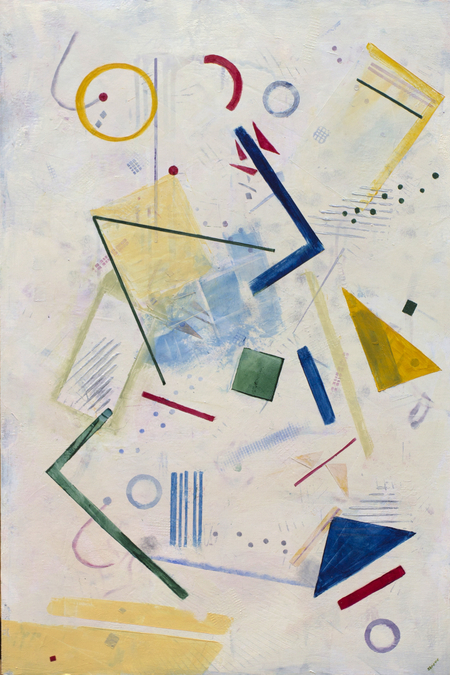
Thus began our friendship and exchange of artistic interests and efforts. Sandy set to work learning the fundamentals of making art and tested her skills under the guidance of various artists. She meticulously researched materials and their properties; how to handle them so as not to create a total mess. Once she embarked on creating visual metaphor, she found it far easier than creating poetry. It gave her a sense of freedom. Sandy’s most recent work includes astounding pieces that convey her process around comprehending and accepting a life-threatening health challenge that, I would venture to say, not only supported her but helped those who care and love her. Her appreciative public audience is never disappointed in the deep meaning of this work.
Monica Bennett, Felt Artist
I’ve been honoured to know Sandy and her late husband, Bill, almost since they first moved to Pender Island. Over the years, we have shared many wonderful hours discussing our art. She is insightful, sometimes challenging, but always leading with her heart and a desire to support other artists. We have had many intimate group shows together. The best were the ones where we responded to each other’s work—my felt art and her painting. It was so much fun to delve into someone else’s work and create a piece from that basis.
Sandy’s thoughtful and dedicated approach to her evolving art practice has been an inspiration to me. Almost every day she is in her studio (often in the early morning and well before my brain could even start working) mixing new paint combinations, creating interesting backgrounds, or working out a tricky design element. Her work has grown so much over the years, the result of all that studio time. Sandy has a distinct palette and a unique take on abstract design, which has earned her work’s acceptance into prestigious, juried, regional art shows. I’ll always remember her excitement the first time she was accepted. I suppose it’s like having one’s first book published.
Diane MacDonald, Photographer
I first came to know Sandy through our shared love and pursuit of photography, and I continue to know her best as a generous and upbeat friend here on Pender. We have talked our way over every hill and dale on this beautiful island, stopping often to admire miniature mushrooms and towering trees. Several years ago, Sandy turned her attention to painting. Perhaps (and this is speculation only) Sandy wanted to shed the constraints of the camera, seeing expanded creative possibility in the paintbrush. Her brush is fertile; her paintings thoughtful and evocative. She is an artistic inspiration, a friend to many in the Pender community, and a loyal companion, always enthusiastic, effervescent, open, caring, and curious.
Kate Braid, Poet, Author and Co-Editor of In Fine Form
Sandy and I sometimes joke we were destined to meet. When my boyfriend (now husband) and his son and I first moved in together to a rented house in East Vancouver, we kept getting mail addressed to the previous occupant, one “Sandy Shreve.” But we officially met when Tom Wayman invited me to join the VIWU, where Sandy was a member.
From the first, Sandy stood out to me for her clarity and honesty and strength of vision. I deeply respected her commitment to working people, including how she worked in various positions in AUCE, the clerical workers’ union at SFU where she was working. Her focus in those years was on writing, and I was inspired by her and the others in the group to begin writing my own poems, give my first reading, and to begin publishing about my work in construction.
Eventually I got curious about the unusual—and I found out, traditional—forms Sandy was using as a framework for some of her poems. Sonnets I knew, but “glosa?” “Villanelle?” “Pantoum?” Soon I was trying them too. We formed a small group of poets who took turns researching and teaching each other about these mysterious and wonderful poetic traditions. I initiated a course on writing in forms at Malaspina (now Vancouver Island University). But every reference text I found had only American writers. Were contemporary Canadian poets using form at all? Sandy and I didn’t know of many. And since form and metre had added so much to our own writing lives, we decided it would be fun to put together a whole book of formal poems by only Canadian poets. Doubtful about how much we’d find, I began browsing through the poetry section in the Vancouver Public Library while Sandy did a combination of library and online searching. We found a publisher willing to take a risk on what might turn out to be a very thin book and sent out a call.
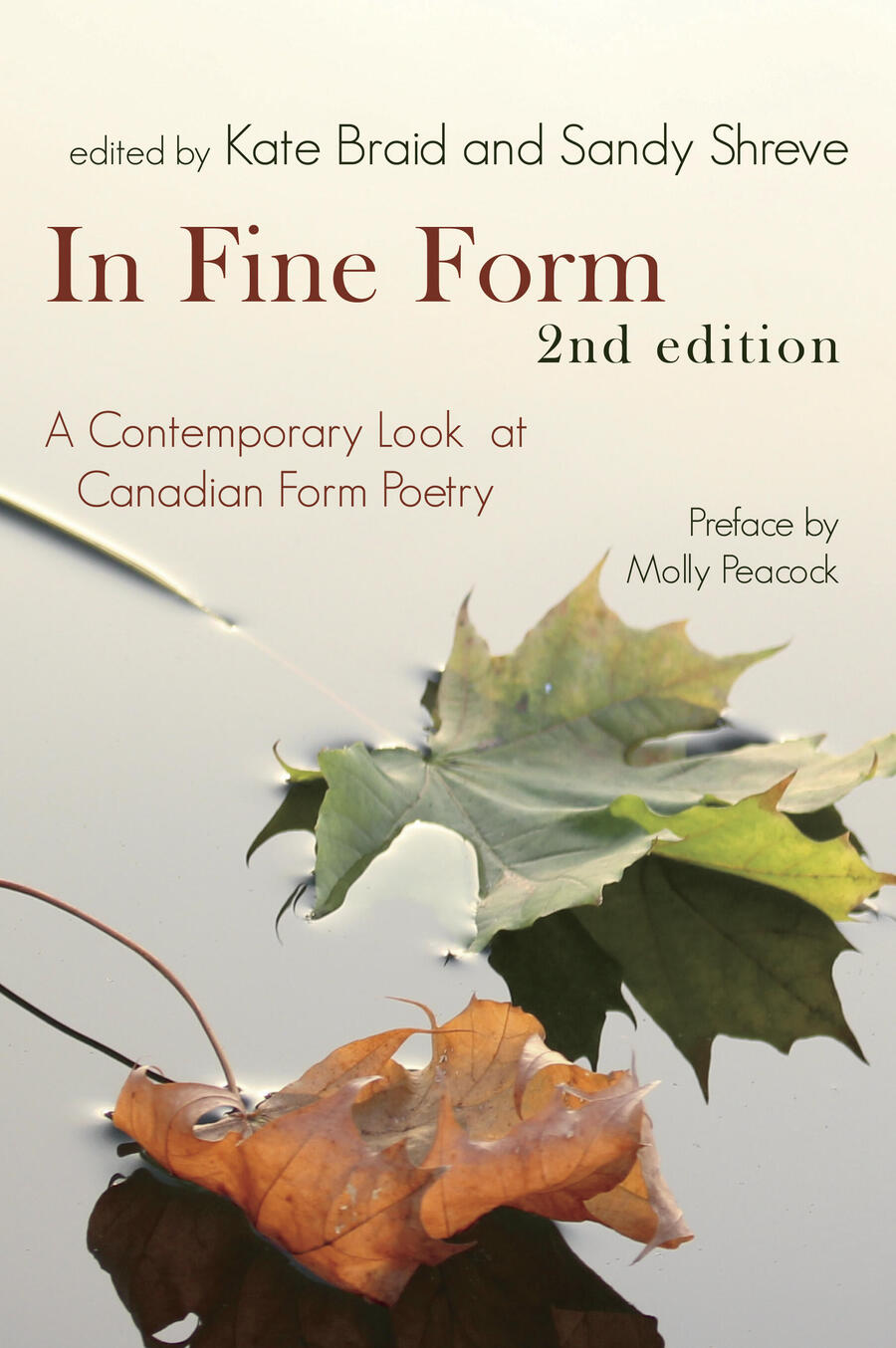
Sandy had more confidence than me, but I was stunned by the flood of replies. Canadians were indeed writing in form, but none of the literary journals seemed interested in publishing them—poets were told they were “old fashioned.” Sandy suggested a brilliant title, In Fine Form, and we were off. We worked hard at selecting the best examples of each form but also added sections on the history of the forms and provided the traditional rules for writing them. It turned out the hardest part was selecting just a few poems out of the great wealth. There were so many, and Sandy and I were both so passionate about this project, that it was hard not to take the process personally. “You prefer this poem over that one? How could you…?”
You’d think—or at least, we did—that after doing one edition, the second ten years later, would be easier, no? No! At one point we had a serious conversation about process, and agreed that nothing, not even this book we were both so passionate about, was going to interfere with our friendship. It helped a lot, but when the updated version of In Fine Form was submitted to Caitlin Press, we shook hands. We’d made it, we were still friends, and if there was to be a third edition, someone else would have to do it!
We’re still close friends. By another wonderful coincidence, we both ended up retiring to Pender Island. It’s a gift to have her clear thinking and care only a phone call away. To my amazement, when Sandy came to Pender she began to do photo art, and now paintings, large and small, many of them dramatic, powerful images. Her leadership to me continues; her handling of her husband, Bill’s, and now her own illness, has been an-ongoing, extraordinary example of courage and clear thinking. I feel blessed to have Sandy Shreve as my friend.
—
Rob Taylor is the author of five poetry collections, including Weather, which was a finalist for the 2025 Raymond Souster Award. He teaches creative writing at the University of the Fraser Valley, where he runs the Fraser Valley Writers Festival.