

“A Ripple or a Faint Sparkle”: An Interview with Poet and EVENT Reading Service Editor gillian-harding russell

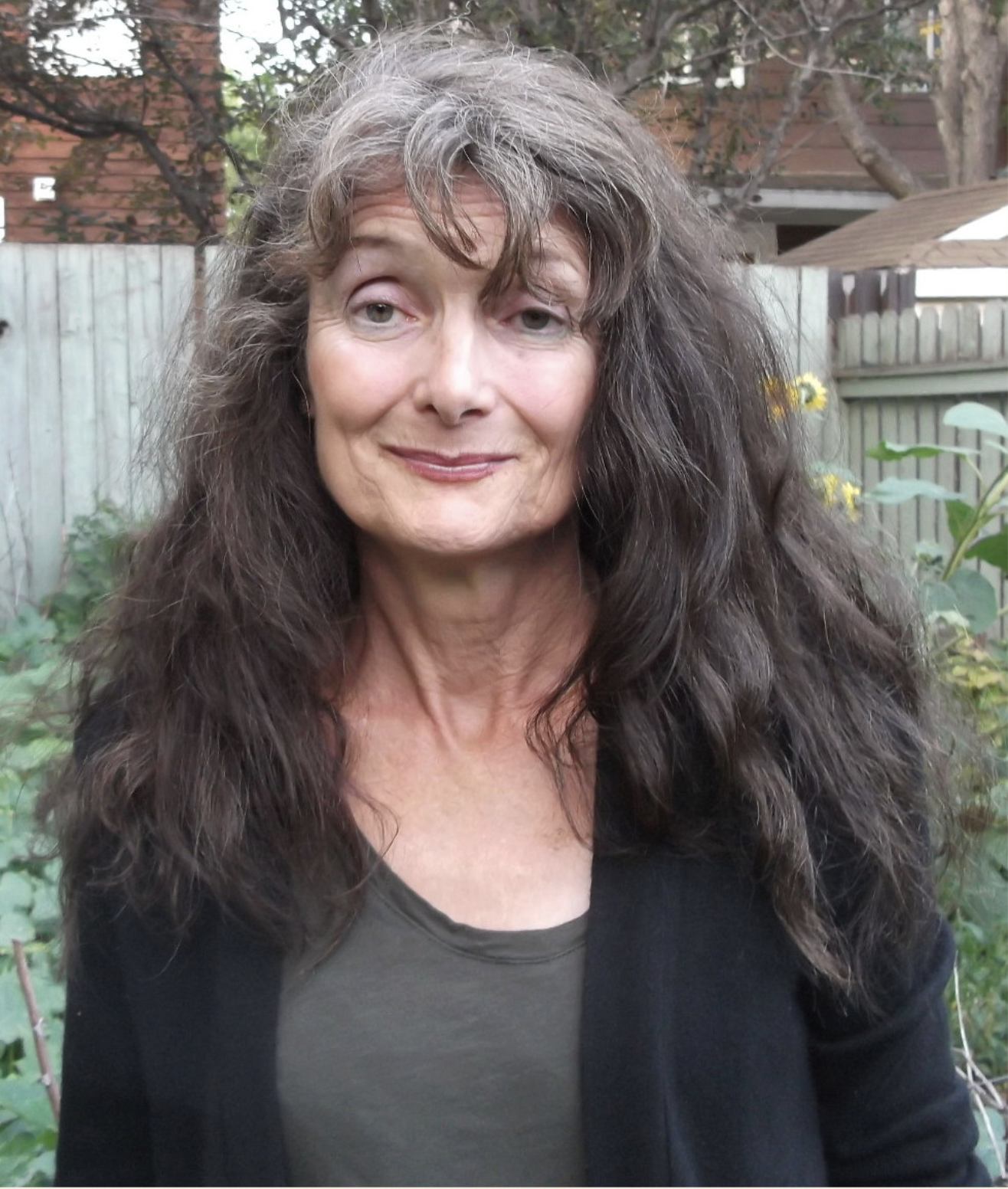
gillian harding-russell is a poet, editor and reviewer. She has published five poetry books and a new collection, Lift the Ear of the Nautilus (Turnstone), is forthcoming. Also, her eighth chapbook A Handle on Things (The Alfred Gustav Press) was published in summer 2026. She has had her poems short-listed three times for Exile’s Gwendolyn MacEwen chapbook award, and in 2016, the sequence “Making Sense” was chosen as Best Suite by a poet at any time in her career. Her poems have been anthologized in 23 poetry collections and published in journals across Canada. She received an MA from McGill and a PhD from the University of Saskatchewan, completing her doctoral dissertation on postmodern Canadian poetry. gillian is also the poetry editor of EVENT’s popular Reading Service for Writers.
OLIVIA MACDONALD: You served as EVENT’s poetry editor from 1988 to 2005 and have continued working with poets through the Reading Service. Have you seen any trends in how the poetry submissions and the kinds of guidance writers seek have changed? What has remained consistent?
gillian harding-russell: Looking back on the submissions I have read during my term as EVENT’s Poetry Editor and later as the Poetry Editor for EVENT’s Reading Service, I would emphasize a branching out of the poet’s individual style while it serves a private subject and have primarily noted new subject matter that mirrors societal concerns rather than a shift in poetic form. These include poems about identity and gender, poems about addictions and world angst, love poems that break from the heterosexual norm, poems written by immigrants that look back on their antecedents and/or days of oppression (often by women from countries where their status is undermined). There are travel poems that explore foreign landscapes or scenes derived from their lost heritage, as well as poems that come from trauma and/or war and perennial carpe diem themes (often from the perspective of age), and elegies about loved ones that open up questions which look beyond our existence and complete understanding.
Poetry has been a genre that welcomes innovation at least since Walt Whitman came up with free verse in Leaves of Grass, Allen Ginsberg with his concept of the breath-take as cadence, e.e. cummings with his minimalist shorthand, and Baudelaire coined the conundrum of the ‘prose poem.’ Removed from the requirements of fixed metre and established stanzaic and poetic formats, the poem was opened up to fit the particular needs of the poet and their expression. Without outside strictures, the poet was then free to make up their own rules for their brand of poem.
That said, the principle of innovation has been explored since that time, with experimentation in taut short lines versus longer meditative lines (often heterometric), run-on stichic poems with enjambment and typographical poems that use the field of the page for expression. Poets today are more likely to remove capital letters from the beginning of verses and to exclude end punctuation to facilitate the flow of language. With the absence of structured end-rhyme, there has been a greater reliance on internal rhyme to enhance the musicality of the line, and a pattern of end-rhymes has largely been replaced by accidental rhyme. There are linguistic poems that focus on words that take the poet where they will without a clear narrative, and imagistic poems that speak solely through their images, and poems that treat the page as a landscape with blank spaces part of their expression.
Over the years of my editorship, I have encountered all these variations of style, including what appeared to me as something of a novelty at the beginning of my career: the prose poem. And I have encountered the work of poets—typically older poets after a lifetime of exploring free verse—who choose to return to a more structured poetic format for various reasons, often to contain emotion within a disciplined form sanctioned by tradition. That said, the poets of today have been given freer reign to do as they please and have taken advantage of the freedom so that innovative form is perhaps no longer the novelty it once was.
The kind of guidance poets have sought from me has not changed too much. Many have asked whether their poems succeed, their particular strengths and weaknesses, and how they may strengthen the impact of their poems. Some have asked for names of particular poets that I would recommend they read, and for online workshops and programs where they might learn more about poetry writing. Another common question is whether some of their poems might be ready for submission to journals, and, if so, to which journals would I recommend that they send their poetry. In all cases, the poets have been eager to learn and have experienced strong feelings that make them want to express their experiences and insights in poetry.
OM: Could you tell us about your forthcoming collection, Lift the Ear of the Nautilus, and chapbook, A Handle on Things? What subjects or ideas brought these collections to life? Do you see these projects as interconnected in any way?
GHR: Lift the Ear of a Nautilus is a collection of poems that I wrote in honour of a poet friend who died from cancer on April 6, 2022. Most interesting, I first met Lisa Rawn through EVENT’s Reading Service, to which she made several submissions before asking Ian Cockfield, then managing editor, if she could contact me personally. Over a decade I helped Lisa edit her poems, and we became close friends, with her meeting me in Regina on several occasions, once for her reading a couple of her poems published in The Saskatchewan Writers Guild’s Spring magazine at the now defunct Artful Dodger pub, and on another occasion to attend the Moose Jaw Festival of Words.
The title Lift the Ear of a Nautilus comes from the title poem of that name. The nautilus has been seen as resembling the universe with its segments closed to each other, but with a convoluted and unseen passage through its centre, and through this iconic image I would like to suggest a listening channel between our physical world and a spirit world where those who have died may exist in another sphere. With the phrase “Lift the ear,” my purpose in writing these poems is to “uplift” rather than to write a requiem or solemn elegy. I have written these poems in honour of my friend, Lisa Rawn, also a poet, and for her “to hear” and for outside readers to listen and perhaps find themselves seeking her chapbooks out.
Here is a brief description of Lift the Ear of a Nautilus:
Elegiac and lyrical, Lift the Ear of a Nautilus marks one poet’s friendship with another who died from cancer. The poems move through my first meeting with Lisa, through memories of her personality, her love of mules and her experience with cancer that she shared intimately through emails, texts and telephone calls — also sending her life treasures in books and later broken seashells from a Florida beach outside the Mayo Clinic. Lisa chose the “broken shells” because she did not want to deny a living creature a home/body in which to live. She particularly identified with an angel-wing bivalve (like a pair of angel wings!) pecked by a seabird, that was included in the last treasures she sent me.
A Handle on Things, a micro-chapbook or holm (defined as “an island in a river,” so a small work in a larger stream) was published this summer by The Alfred Gustav Press (2026). Although the poems are unrelated to Lift the Ear of a Nautilus, they are part of another larger manuscript Domestic Disorder, which has been accepted for publication at Guernica Editions.
A Handle on Things presents the quotidian problems and anxieties that we face with daily living, and Domestic Disorder provides a wider spectrum of household problems, with an epileptic and wily, willful black lab who is a love and worry at its centre. In the title Domestic Disorder, I play with the idea of the microcosm (the ‘dome’ of my head) as linguistically part of “domestic” and of the larger extending world where thoughts wander and sometimes take off with a life of their own.
Here is a brief description of Domestic Disorder:
Disorder most often sets off the plot in Domestic Disorder. The speaker writes from a domestic setting inside an aging house, but also, as inside Chinese boxes, from inside the ‘dome’ of her head. Within the microcosm of her consciousness, she mulls haps and mishaps, loves and their worries, undercurrent dreams, an epileptic dog, spectacular migraines and god-thoughts that spark thunderous or tender feelings amid realizations that lightning can strike to light up the dome of that skull-house. Far from tame, these household poems aspire—often jauntily, with shades of comedy and irony—to the roots and outer vibes of the universe. These poems may remind readers of their own domestic experiences with house repairs, pets, accidents and the problems that sometimes surface amid dreams, throwback memories, and out-of-this-world wonderings that happen between.
OM: When assessing what makes a collection, how do you decide whether an unusual poem that might be a thematic or stylistic outlier adds necessary range or weakens the manuscript’s coherence?
GHR: What an interesting question! I think an outlier poem should have at least a tangential, perhaps subconscious, connection—whether tonal or through theme or imagery—that adds resonance to the collection as a whole. Often a gnomic or dream poem or an imagistic piece can work on several levels, one of which includes a thread that is related to the collection as a whole.
As an example, in Margaret Atwood’s Dearly, the feminist poem “Digging Up the Scythians” might be considered an “outlier” in a collection that is elegiac and dedicated to her husband, Graeme Gibson, who suffered from Alzheimer’s during his final years. Nevertheless “Digging Up the Scythians” with its treatise on ancient warrior woman coupled with a poem later in the collection, “Update on Werewolves” in which the poet’s husband’s condition as transformed into a “werewolf through his medical status is implicit allows the two poems to blend on a fantasy level to suggest how things have always been as they are amid variant transformations as recently as today. In a humorous turn, werewolves are seen to have evolved among the female sex as well as the male: “Long-legged women sprint through ravines/in furry warmups, a pack of kinky/models in sado French Vogue getups/and airbrushed short-term memories,/bent on no-penalties rampage.” Accordingly, Atwood modulates the elegiac mode with a trademark symphony of fairy tale and gothic moods.
Similarly, in Patrick Lane’s The Quiet in Me, the poem “Carefully” might be considered more of a fragment and so a structural and enigmatic departure from the more fully developed poems in the collection. In this poem, the poet presents a stoical mole that, in a seemingly futile endeavour “in his small room/moves out a small stone/and waits out the rain.” The poem is about tiny measures to survive and get on with things, and the wry tone may be said to be on a spectrum with the meditative poems, while the poet also makes the most of things by doing something small such as writing a poem when cooped up in winter and old age. Most delightfully the poem adds whimsical humour to a more sombre collection of poems.
Again, in David Zieroth’s The Fly in Winter, the title poem is imagistic whereas the other poems in the collection have narrative and dramatic elements and are essentially lyrical. So, the poem “The Fly in Winter” might be considered an “outlier,” but it carries a carpe diem theme that runs through the collection and becomes iconic. Naming the collection after that structurally different poem, moreover, has the effect of highlighting its importance, both tonally and thematically, to the collection as a whole.
In my own upcoming Lift the Ear of a Nautilus, the somewhat gnomic title poem, “Lift the ear of a nautilus,” may be considered an imagistic and symbolic outlier, but in the manner of “The Fly in Winter” I believe it also becomes iconic,” and in Domestic Disorder, the dream poem “The golden ant” and “Like the half girl in the fairytale” (drawn from Celtic fairytale) might be thought of as unusual and add resonance on a somewhat cryptic but suggestive level.
OM: Is there a form or technique that you particularly enjoy experimenting with in your writing? What possibilities does it give you?
GHR: Rather than express an idea directly, I follow Emily Dickinson’s advice, to “tell the truth, but tell it slant.” In other words, I prefer to express an idea through images that speak through my understanding (or gut feeling), but that then speak on their own terms: a kind of playing with my subconscious. Often this exercise can lead to what I like to call pure poetry.
In the past (indeed even recently!), some of my poems were considered too discursive, and so to avoid this weakness I have developed this “technique” (if you would call it that). Instead of expressing an idea directly, I present a picture in my mind that gives rise to an idea. Also, to prevent the poem from appearing too prose-like, I pare the language down to its essentials. I look for words and phrases or even whole lines that may be scrapped to let the bare bones of a poem say what is needed. Often introductory scaffolding or a digression can weaken the impact of a poem, so I must look out for these beginning and ending stragglers. I try to avoid stating what may already be implicit or mentioned in other parts of the poem. Poetry is a minimalist art form, and so fewer words often bring a concentration that can lead to a more poignant poem.
What forms have I experimented with? As most beginner poets, I have worked with villanelle, pantoum, and the sonnet, et cetera. but when the subject could not be cajoled into the mould and convention of that particular form, I confess that I have modified the convention to suit the particular poem. For example, the poem “Nothing Prepared Me for Winter” (I Forgot to Tell You, 2007) began as a villanelle that I found much too constrictive and so broke out of the form to find my own pattern of repetition as a kind of interior and psychic chorus. To my delight, that poem was awarded a Saskatchewan Writers Guild Poetry Award, first prize—back when the guild gave prizes for individual poems. I have also worked in sonnets with 14 lines, including an octave and sestet, but have usually relied on accidental rhymes that accent moments of insight or serendipity. Although form in giving structure to emotion can have the happy effect of averting what may otherwise appear sentimental, I prefer natural speaking rhythms and try to avoid archaism and sentence inversions such as the Romantic poems adopted to achieve an end-rhyme at whatever cost.
OM: You have five poems accepted for publication in The Antigonish Review, written after a visit to Nova Scotia. Do you find that different environments or landscapes shape your creative process? More broadly, what tends to fuel your inspiration and when do you feel most motivated to write?
GHR: Most definitely! With a new environment, one’s perception is at its sharpest while everything is new. Coming from elsewhere allows you a distance that brings insight that might not occur to someone who is habituated to that location. Although I have visited my brother, a retired oceanographer (from Bedford Institute) before, I hadn’t visited him for a long time. (When we had small kids, it was easier for my brother to visit us in Regina.) During my last visit, Gareth took me to visit various favourite hiking sites such as Peggy’s Cove and Polly’s Cove and Point Pleasant Park, and my son (also on vacation with me) walked with me to the Citadel near where his uncle lives, to Dalhousie University where he had attended, and the harbour with the American and Canadian warships near Halifax. My brother has a cottage in rural Morar, which faces Prince Edward Island, and there is considerable wildlife, including bears and an oceanfront where he might occasionally see a great white shark (with global weather change). My brother told me stories about the locals from near and far history and his personal acquaintance, and I have learned so much! Unsurprisingly, a lot of the stray information leaked or informed or in some way influenced the poems that I wrote during and after my visit, and they are all grounded in that terrain.
Visiting new places has inspired me to write other sequences as well. The chapbook Where the Days and Nights are Equal Length was written after a visit to Los Cabos on the Mexican part of the Baja Peninsula, and I was thrilled when it was short-listed for EXILE’s Gwendolyn MacEwen Chapbook Award in 2013 (a favourite poem about a vulture, “Desert Duets,” was shortlisted for “best poem”).
Again, on my daughter’s wedding in Bali, my husband and I sojourned in Bali, and I wrote a sequence of poems about our amazing visit to that exotic landscape so different from our own. As you may guess, I have quite a few stray manuscripts that need organizing and polishing, and this manuscript is another one of them. Possibilities for the title might be “A maracas calls for rain,” or “Bali: tales of wonder and terror” or “A seedpod of memories.”
OM: You are both a working poet and an editor of other poets: Does one role ever interfere with the other? In what ways does your work as an editor complement or influence your own poetry?
GHR: The two roles as editor and poet do require different modes of thinking, it is true. To edit a poem, I have to don one type of hat whereas to write a poem, I tend to go hatless:
As an editor, my mindset is logical and precise, aware of grammar as it applies even to poetry, paying close attention to details and the overall effect of the poem, considering whether the words that are chosen evoke what the poet intends (here I have to put myself inside the poet), getting rid of the superfluous where emotion can go astray or into overdrive and run over itself. And where there are intended deviations from ordinary grammar for a particular effect, my job is to make sure the laws in this self-created universe of the poem are consistently applied throughout. In cases when the poem falls short for whatever reason (in my view), I look for ways to make what I understand as the poet’s intended expression more effective, and to render the poem perhaps more moving or poignant.
As a poet, I write more from what I describe as feelings and instinct (often drawing on a reservoir of subconscious imagery) in response to a thought or happening in my own life or world event that has somehow affected me. Thoughts in the raw are not all that logical before the rational mind organizes them into sentences, but in writing a poem those thoughts or half thoughts may be recorded in words that use unprocessed imagery and snippets of language, often song-like, as they enter the uncensored mind. So, my hope is that the reader on encountering that choice and arrangement of words may experience the same feelings that I, as the poet, have felt.
This is not to say when I write as a poet that I abandon my knowledge as an editor entirely. All the baggage of experience with writing stays with me while I work on a poem, and often I will grab a tool out of my mental suitcase on the trip of inspiration and fix a problem—like right away swatting a repetitive stray fly that has made it into the house. However, the clearest view comes after a time away—a day or longer from the particular poem—when I can return and see the poem with a greater clarity and judge it as I would judge someone else’s poem. Typically, I must read the poem’s draft aloud (or aloud in my head) to listen to what flows and what does not and to attempt to streamline the language or, for some poems, I work on its deliberate jangle.
OM: Do you have any editorial advice you frequently give but still find difficult to apply to your own writing?
GHR: Poetry writing doesn’t get easier, and I face all the difficulties that those I advise who are attempting to write poems may experience. Each poem is different and poses its own challenges so that having written poems for five decades does not guarantee a successful poem. To get the right word arrangement on the page to elicit the thought and its feeling does not usually come on the first try, which may be too sketchy and fragmented or baggy and amorphous: too close to prose. I advise poets to cut excess verbiage so that the true lines of the poem shine through. For me the greatest challenge lies in revision with the need to chisel expression, often muddy with prose, into that rarefied form, poetry. I too have to look for ways to remove words and phrases that may be implicit, that are too chatty or clichéd or are merely what are grammatically termed “dead wood” (often excess modifiers, the relative “that” or “which” and articles can be removed).
Although poetry has been described as a vessel through which the gods speak through the poet (as with a Greek oracle!), that stage of intuitive writing remains the first stage before the hard work of shaping the poem so it may reach the reader or listener and conjure the same magic of feeling in them as inspired the poet to write the poem. Of course, there is the rare, totally inspired poem that comes out fully formed or almost.
OM: EVENT’s Poetry Reading Service asks you to assess up to 10 pages of poetry and provide both a detailed commentary and an edited manuscript. When you receive a submission through EVENT’s Poetry Reading Service, what does your first reading look like? What do you listen or look for when assessing whether a poem is working?
GHR: Typically, I print out two copies of the 10 poems and read the first copy of all 10 poems that I mark with first impressions and note if they are part of a sequence. I then go back and read each poem and analyze it separately, making notes on the text of the poem that I later transcribe or enlarge on a written EVENT Reading Service report. I consider, first of all, does the poem move me? I consider where the poem is coming from, the voice that speaks through the poem. I listen for the flow of language and consider whether there is a music of the line that complements the subject matter, and I look at the poem’s imagery and consider how images are used (avoiding mixed metaphors) to evoke a thought that has become one with its feeling. If a poem somehow falls short, I consider ways to enhance the poem’s impact. In the cover letter to the EVENT Reading Service report, I make a point of mentioning the most successful poems among the 10 pages, since it is so helpful for the poet to know what works. I will then point out some of their strengths followed by a list of weaknesses and suggested changes and/or recommendations.
Finally, I read the second printed copy of the same poems all over again, and make final comments on the poem, often adjusting a comment or revising a criticism that I may have noted on first reading the poems. And if I feel that I have misjudged a poem on my first reading, I will also go back and revise my comments on that poem in the EVENT Reading Service report.
OM: Writers can submit up to five questions with their manuscripts when submitting to EVENT’s Poetry Reading Service. What kinds of questions tend to lead to the most fruitful assessment?
GHR: The questions that tend to lead to the most fruitful assessment might be: What are the strengths in my poems? What are the weaknesses that might be detracting from their final impact? My poems were fun to write but would they be of interest to an outside reader? How may I strengthen my writing style and poetry? What poets and poetry collections would you recommend that I read? To which journals or literary magazines would you recommend that I send my work? Might there be any poetry workshops that might help with my writing?
OM: What do you listen or look for when deciding whether a poem is working? Does your attention go first to its voice, sound, imagery, structure, emotional movement, or something less easily defined?
GHR: When I read a poem, I first of all discover whether it moves me, and voice plays an important role. Each poem works through a different medley of techniques with an appeal to various senses, so I would not consider any one literary device in isolation nor proscribe any one of those devices. All of these aspects of the poem work in particular combinations that shape the individual poem, but they may not all be found in any one poem. Whereas imagery may shape one poem, the music of the line may be a defining feature in another. Structure and emotional movement inform a more narrative poem. Voice and affective impact are paramount but are influenced by other distinguishing features in the poem. Usually, a poem should return to the speaker so that the voice of the poet is clear.
OM: What poet, poem, or collection do you return to when you need to recalibrate your ear?
GHR: There is not one poet, poem or collection to which I return, but many. Among earlier poets, I have become fond of Rumi’s elemental style and simplicity, especially the elegant extended metaphor in “The Guest House.” I also return to John Donne for his metaphysical conceits and whimsical sonnets, as well as his meditations, which read like prose poems. Gerard Manley Hopkins’s “The Windhover” is unsurpassed in its sprung rhythm, which mimics the bird’s flight. The bird’s soaring and diving and the speaker’s daunting feelings toward God are reflected in the poem’s movement. Yeats’s work ranges from the mellifluous early poem “The Lake Isle of Innisfree” to stark and ominous poems written in response to tumultuous times, such as “Easter, 1916” and “The Second Coming.” Rainer Maria Rilke’s Sonnets to Orpheus and Duino Elegies are collections I first picked up during my university days and still treasure. I am partial to Ted Hughes’s terse precision in “The Thought-Fox” and many of his other nature poems. T. S. Eliot’s “The Love Song of J. Alfred Prufrock” is a melancholic and satirical reflection on societal malaise. I also return to The Waste Land and “Burnt Norton,” the first poem in Four Quartets, both of which I find beautiful and profound.
Among Canadian poets, I long ago became enamoured of the poetry of Gwendolyn MacEwen and Michael Ondaatje. I wrote a PhD dissertation on the mythopoeic element in their work. My favourite MacEwen collections are perhaps The Shadow-Maker and The T. E. Lawrence Poems. Poems from The Shadow-Maker that still speak to me include ““The Red Bird You Wait For,” “Dark Pines Under Water” and “The Discovery.” “Letter to a Future Generation,” which continues to address our times, also comes to mind. As an admirer of Ondaatje’s poetry, I would cite older poems such as “Letters & Other Worlds,” “To a Sad Daughter,” “White Dwarfs” and “Pig Glass” for their abrupt dislocations and ironies. From his more recent work, I return to “Talking in a River,” with its quietly observant speaker looking back on a lifetime. A good book for aspiring poets is Ondaatje’s The Distance of a Shout: Selected Poems, which gathers poems spanning 50 years of his work.
I have rambled a bit in answering this question and still do not feel that I have answered it sufficiently. There are so many other poets whose work I admire. Tim Bowling’s Fathom, which explores memory, ancestry and the salmon-fishing culture of the Fraser River, and George Elliott Clarke’s Execution Poems, which tells the story of his cousins George and Rufus Hamilton, are two more collections that stand out in my mind. The brothers were hanged in New Brunswick in 1949 after being convicted of murdering a taxi driver. Other collections that stand out include Margaret Atwood’s flinty, heartfelt and whimsically wondrous poems in Dearly; Patrick Lane’s meditations on mortality in The Quiet in Me; Russell Thornton’s Two Songs: Selected Poems 2000–2025; and David Zieroth’s Governor General’s Award-winning The Fly in Autumn. I also admire the balcony poems in Zieroth’s watching for life, a collection inspired by the pandemic and a move. His first here and then far: Selected Poems 1971–2024 gathers work from more than half a century.
But again, I find I have left out so many wonderful poets. Don’t forget Pablo Neruda’s love sonnets and Seamus Heaney’s secular poems, so earthy and human, among countless others. Randy Lundy’s Blackbird Song is a well-tuned and forthright collection by an Indigenous poet, and lately I have been struck by Jane Hirshfield’s nuanced work about nature and human nature. I would advise aspiring poets first to find an anthology of older poetry, then perhaps pick up selected works by contemporary poets. They should also subscribe to literary magazines and journals to see what is being published today.
OM: If you could go back to when you were publishing your first collection, what would you tell your past self?
GHR: I would tell myself not to get discouraged by rejections. To persist with a poem to make it better, perhaps setting it aside to gain some distance on its shortcomings before returning to it.
I would tell myself to open myself to criticism and to learn from my failures. I would remind myself that, introvert though I may be, I would like to reach an audience who might share my thoughts and emotions through poetry.
I would tell myself never to give up—which I did for a couple of years under work-pressure during a PhD program in English and Canadian Literature during which I wrote a thesis on postmodern poetry with a focus on mythopoesis. Again, I slowed down when my children were small. But if that happens (sometimes it cannot be helped), I think of what Carol Shields—who was writer-in-residence at Douglas College when I first began assisting EVENT Magazine as a reader—advised me: she told me not to worry about not being able to write, and that when the children grew up a bit, I would surely find time to pick up the pen again. She confessed that she, too, had stopped writing during early motherhood.
So do not feel dejected when times are difficult because if you persist, you will surely be able to write again. And I have found writing poems is a marvellous way to understand the world you live in with yourself a small point floating somewhere—a ripple or a faint sparkle—in its midst. And yes, I write a poem longhand in its first draft—I cannot face the face of a computer without my own footprints blazing some sort of homely trail on familiar paper.
And, at all costs, I would tell myself if I were beginning today, don’t let AI take over an iota of your brain or soon you will be writing in algorithms.
Want feedback from gillian on your own poetry? Through EVENT’s Reading Service for Writers, you can submit up to 10 pages of poetry and receive a detailed assessment and an edited copy of your manuscript. All manuscripts are also considered for publication. Learn more and submit to the Reading Service.
OLIVIA MACDONALD is the Magazine Intern at EVENT. She is currently completing a Master of Publishing at Simon Fraser University and is co-editor-in-chief of Bitter Magazine.