

“Poetry Is the Potential Space Within the Walls of the Language House”: Cassie Williams Interviews Tolu Oloruntoba
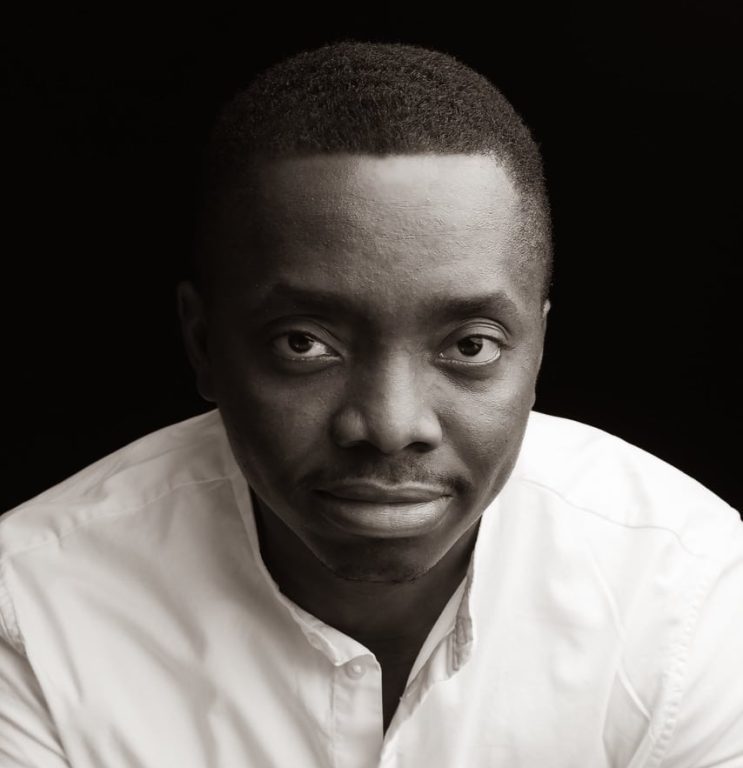
Tolu Oloruntoba is a project management person and lapsed physician from Ibadan, Nigeria. He is the author of The Junta of Happenstance (Palimpsest Press, 2021), Each One a Furnace, and Unravel (McClelland & Stewart, 2022, 2025). His work has won the Canadian Griffin Poetry Prize and Governor General’s Literary Award for English Language Poetry. He lives in Calgary, Alberta, and writes poems in the small crevice between parenting two young children, working as a poetry and copy editor, and managing provincial healthcare projects. He is very tired.
Cassie Williams: Congratulations on the publication of Unravel!I loved this collection and I found it so engaging, especially because of the way you were able to depict and connect so many varying life experiences through these poems.
As this is your third poetry collection, and you seem to primarily if not exclusively, write poetry, what do you feel poetry offers that other forms of writing and genres don’t?
Tolu Oloruntoba: My primary writing project in the last decade has been the creation of project management emails. Hundreds, weekly. Poetry is my escape from that. I think people can find inspiration, comfort, provocation, education, levity, escape, and so on, in a variety of expected and unexpected places. So, I can only answer this question for myself. What does poetry offer me, that other forms of writing and genres don’t? Poetry is the potential space within the walls of the language house. It is therefore one of the shortest paths between meanings. It can bypass the thinking brain and implant emotion and empathy. However I am feeling, I can find a poem that resonates with that state of mind and that makes me feel less alone. Poetry constantly tries to transcend the language that seeks to limit it. With poetry, therefore, I am more likely to understand or say more than mere word arrangements mean.
CW: From your notes in the back of this collection, it’s clear that you gain inspiration from many different facets of life. Would you say your writing is most inspired by personal experiences, other writers and works, or external elements like nature, music, art, science, etc.?
TO: Being neurodivergent (and a former trivia quiz team member and captain) means I have some niche interests and have accumulated a strange assortment of facts and inspirations. Poetry is one way to organize it. The thread is whatever emotion is animating the current work; the beads are the bits of nonsense I have floating around in my brain. I do need to rein it in sometimes because I occasionally read something I wrote previously and even I have no clue what I was going on about.
CW: I am so curious about your background. Before starting to write and publish poetry, you established a career in medicine. What was this transition from medicine to writing like, and what spurred the decision? Did you write much growing up? Was it always a dream below the surface, or did it reveal itself to you later in life?
TO: I started to write poetry when I was 15 or 16, so this was before I even went to medical school. It is the vocation I have kept at the longest of all. The writing sustained me (not financially lol) through the rest of my teenage years, medical training, and practice. It was always a way to process the inputs I was receiving at each stage of my life. So everything, at every stage, bleeds in. It was very helpful for processing the things I was learning about like dysfunctional family dynamics, complex trauma, mental illness, corporate life, and of course, health and disease. Now I’m a 40-year-old guy writing through the ennui of midlife.
CW: Do you feel that your experience in medicine shows in your writing now, and if so, has it helped you or rather stunted you?
TO: I would have been more morally and psychologically injured by medical training and practice than I was if I did not have poetry. The western medical tradition approach to nomenclature also melded quite well with my love of etymology and recombinant language. All those words with Latin and Greek roots have given me a special (at least to me) view into what and how words in English can mean. One key thing most medical trainees learn is to observe keenly and describe accurately. Writing poetry involves keen observation: receiving and interrogating the world repeatedly and incrementally, and diligent description: writing and editing until the written thing is as close to its mental sibling as possible. So I remain grateful for my life in medicine.
CW: Focusing back on your poetry, in an interview with Shelagh Rogers on CBC’s The Next Chapter, you said you felt “intimidated” after winning the Governor General’s Award for Poetry. Do you still feel this way when you get recognition now, or when you release new work?
TO: As has been wisely pointed out elsewhere, impostor syndrome never really goes away for most people. In my case, I feel like an impostor because of my awareness of how I stumbled into writing, and how frequently I encounter luminous writing that makes me ask why I even bother. Releasing new work, with the scrutiny and risk of perception it could entail, remains fraught for me. That’s because the deep need I have to externalize my thoughts also includes the need to share those perspectives (with all their implied and actual vulnerability). Getting the thing to an audience completes the reaction (which could then lead elsewhere, ad infinitum). The first part is mostly solitary, the second is sometimes dangerously social. Once the author has released a creation, it develops its own agency, becoming open to interpretation in ways the author might not even have intended. There are also thoughts of “Will anyone like it?” and “Has anyone caught on that I’ve been writing the same five poems repeatedly?” and “What does any of this matter when we’re so steeped in the horrors of the actual world?”
CW: Thinking of those questions and worries, was there anything you edited out of this collection that you wish you could have kept in?
TO: My editor, Canisia Lubrin, must have been horrified by the length of the manuscript I submitted. It was twice the length of Unravel. I’m glad she was able to excise much of the repetitive or non-resonant poems and help me discover where I could merge some others. She shared some wisdom that has stayed with me since: a poem, even if it is good, may not work for the current book, but that’s ok! It can go in the next one. That helped me to be less clingy, but I do mourn the fact that we had to cut “Ways to Describe an Asteroid” (published in Volume 53, No. 2 of The American Poetry Review).
CW: Has your overall attitude toward writing poetry, or toward the publishing industry, changed since your first book?
TO: I have discovered via proximity that the amount of work and artistry that go into editing and publishing a book are astounding. I’ll paraphrase Teju Cole: one name may be on the cover, but dozens of people made the book and hundreds more contributed vitally to the thing the book became. It’s a group project, but one person gets most of the credit.
CW: You play with form and style in this collection—found poems and poems of varying length, with different approaches to line breaks and spacing. Do you have a favourite form or technique to play with when writing a poem?
TO: I like forms that provoke surprise. I don’t write these often enough, but they are usually refreshing when I am able to. Take pantoums, sestinas, or villanelles, for instance. The restrictions they impose often lead down unforeseen and delightful paths. I often experiment with new forms that I encounter (the golden shovel, for instance).
CW: At what point does considering form come into play for you? Do you find that you go into a poem with a certain format in mind, or does it come to you once you’ve settled on an idea or started writing?
TO: I don’t often go into a poem with a decision about what form to render it in. The poem itself often suggests the form it wants to be expressed in, often in the editing process (which could range from weeks to as long as 20 years). For instance, the poem “She Says,” from my debut collection, began as an erasure of the package insert that came with the first antidepressant I was prescribed. That form wasn’t quite accessing the mix of curiosity, anxiety, and ambivalence I was feeling, so I abandoned it for the eventual form the poem was expressed in.
One exception is erasure or found poems. Those often insist on being written—often as a subversion (as in my unpublished erasure of the Business Insider article: “The US Army just got its hands on the best night-vision goggles in the world – here’s what it can do and what’s next”) or meta-commentary (like the unpublished “The Feasibility of Milk and Honey,” from a 2013 business feasibility report written by Guantánamo Bay detainees), or a scaffold for my own agenda (like the one from the dialectical behavioural therapy tool “Emotion Regulation Handbook 20A: Nightmare Protocol”). I must say I do enjoy centos as a form of literary collage. I wanted to write an Ars Poetica after seeing what Aracelis Girmay did with rice in “Arroz Poetica.” But why pay homage to one Ars Poetica when you can do that 30 times over? That became the poem “Àrósò Poetica.” I probably won’t do that again at that scale, though. Seeking and receiving permission for works not in the public domain from the poets themselves, or through their agents or estates, got very complicated as we approached publication.
CW: In 2020, you wrote a piece for the blog my (small press) writing day on your writing day and process. Given that this was written during the pandemic and also five years ago, how has your process changed since then?
TO: The pandemic (which we’re unfortunately still in) changed my writing process in ways it has not fully recovered from. That 2020 piece remains true to my current process. I have two children now (and much more responsibility in my day job), so the difficulty I face in my literary work is even higher. I eventually completed the poem I excerpted and was complaining about in that blogpost. It’s titled “It is common for an animal, even in death, to resist its own deconstruction” in Unravel. Thanks for reminding me of how that began.
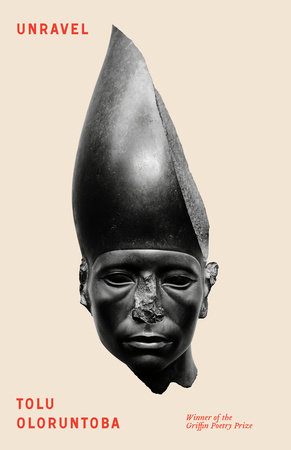
CW: It’s so interesting to hear how certain pieces came to be and where their formation began. It makes me think of the cover of Unravel as well. It is so striking, simple yet bold with that eye-catching red font, and of course the image in the centre. How does Unravel’s cover image connect to and represent the themes the collection explores? Can you walk us through the process of how you landed on this art piece?
TO: Serendipity and budget led to the use of the public domain image we eventually went with. I like how it turned out! I had initially wanted to commission custom art for the cover, something with torque and emotion, as I remember telling my publisher. I had been fascinated by Ekow Nimako’s LEGO art pieces. He was gracious when I reached out for a potential collaboration but was fully booked. There was no budget to commission any of the digital artists and painters whose work I follow on Instagram. I spent a long time looking through Wikimedia images to try to express to my publisher what I wished the cover to look like. Once I found the head of Amenemhat III wearing the White crown, I knew that was it. The publisher reached out to the Ny Carlsberg Glyptotek, and when they granted permission, Jennifer Griffiths created the magical cover. I’ve condensed a process that took several months and many drafts, of course. I’m grateful to Kelly Joseph for helping me navigate the process.
CW: Speaking of process and drafts, have you started to think of what will come next, or are you already working on the next thing?
TO: I’m about 70 per cent of the way into my next poetry manuscript. I need to give it about one more year of writing to cover the aspects I’ve not written about adequately. Movies are a great love of mine, and this book began as I watched the fourth John Wick movie over someone’s shoulder on a plane. Let’s see how it goes.
CW: Is there a topic or genre that you have wanted to tackle but haven’t yet?
TO: I began my exploration of writing as a teenager after reading Stephen King’s The Gunslinger and The Stand. I faced the same issues with plot as I faced when I was really focused on creating comics. I really wish to create a speculative story as poignant as Swan Song (starring Mahershala Ali and Naomie Harris) or as inventive as Premee Mohamed’s The Siege of Burning Grass, or as prescient as Christopher Brown’s Rule of Capture. I’ll keep trying, but developing a new skill is hard work!
CW: If you could go back to when you were publishing your first collection, what would you tell your past self?
TO: If I could go back, I’d tell myself: Do it scared! Include the poems that scare you. It’s a good thing you didn’t publish the 2014 manuscript. I’d also say: You don’t have to be so cryptic just to avoid offending those you wish to maintain a relationship with. They won’t even read the copy you mail to them, and if they do, they’ll never mention any it.
Cassie Williams is a Creative Writing student at the University of the Fraser Valley.