

“Saying No With Love”: A Conversation With Chelene Knight

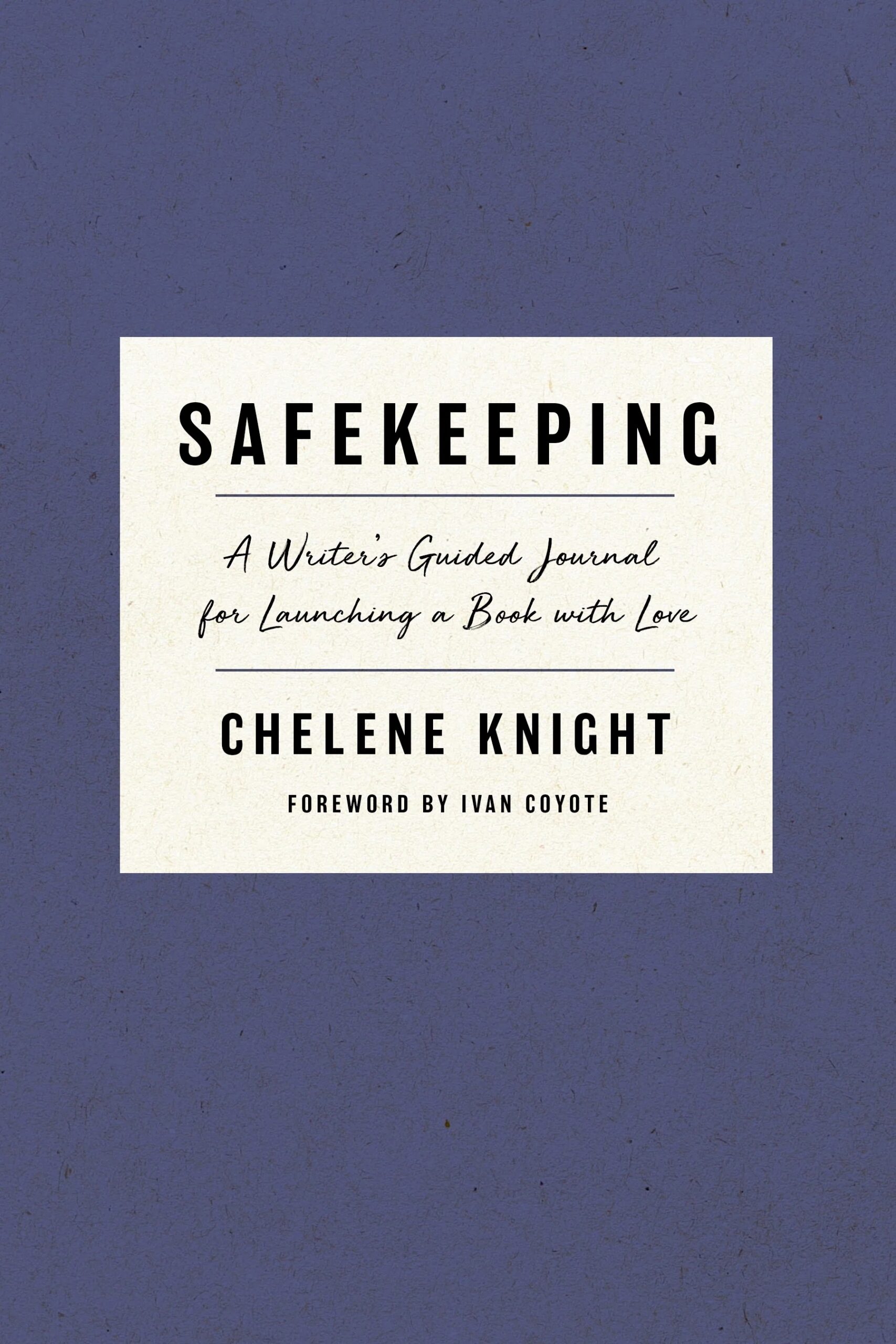
Chelene Knight is the author of Braided Skin (Mother Tongue 2015), the memoir Dear Current Occupant, winner of the 2018 Vancouver Book Award, and long-listed for the George Ryga Award for Social Awareness in Literature. Her novel, Junie (Book*hug 2022) is winner of the 2023 Vancouver Book Award, long-listed for the inaugural Carol Shields Fiction Prize and a finalist for the Ferro-Grumley Prize for LGBTQ fiction. Her book of narrative nonfiction, Let It Go: Free Yourself From Old Beliefs and Find a New Path To Joy is out with HarperCollins Canada. Chelene’s guided journal, Safekeeping, is out now (Anansi 2025). Chelene runs her own creative clinic, Breathing Space Creative Studio.
Caitlyn Carr: Your recent book, Safekeeping: A Writer’s Guided Journal for Launching a Book with Love, is a tool that writers can use wherever they are in their writing journey. I think it’s amazing that you’re so open to supporting writers in their journeys, both by writing Safekeeping and by founding Breathing Space Creative, your holistic writing studio. Seeing as how the publishing industry is fairly competitive, why do you think many authors still choose to support each other in their crafts and careers?
Chelene Knight: Publishing can be competitive, but the writing and creative process is so much more than publishing, and this is the bit we often need to be reminded of. Writing is a tool, an art, an action. We often get so focused on our outcome or end result that we forget to enjoy all the stumbles, the “aha” moments and that feeling we get when we have an idea that we want to go back to. We need to support that side of writing.
I’ve been really focused on helping creatives recognize the value of all the often invisible work we do: the conceptualizing, the trial and error, the struggling to articulate what we want to say, the endless revision and tinkering. And beyond that, all the parts of our lives that feed the work: how we live, how we spend our time and energy, and how we learn to protect the creative vision we’ve built for ourselves. And figuring out how it all flows together into a self sufficient ecosystem. None of that is easy. But the more we honour and speak openly about the value of the entire creative life, the more the industry might start to shift. I want to help change the way we view and value the working artist. I really do.
CC: In the newsletter Stories from the Pink House with Rina Barone, you encourage readers to read All About Love by bell hooks because, “before we do anything else, we need to learn what it means to be human.” What do you believe it means to be human? Can you describe the relationship between one’s humanity and literature?
CK: To be human is to keep rediscovering ourselves, again and again. That requires looking closely and getting curious about the world and the people around us. It means slowing down, pausing before we respond. In today’s world, we operate on assumption far too often, and I think that’s dangerous. As writers, we sometimes assume things about one another instead of asking questions that help us see and hold a fuller picture. bell hooks’ All About Love is a life guide for me. I return to her book constantly, rereading passages, using excerpts as exercises for writers, and designing workshops inspired by its ideas. It reminds me to think differently, to stay grounded in what it really means to be human. And sometimes, in our rush to publish, we forget that part.
CC: It’s wonderful to be exposed to authors who inspire us that way. In chapter five of Safekeeping, you ask readers to write a letter to an author they admire. Could you share some people you’ve written such letters to?
CK: Yes! I’ve written unsent letters to writer Wayde Compton, Jen Sookfong Lee, David Chariandy, and Jen Currin. Without these writers showing up in my life in those early days, I’d never be doing this work. I am so grateful for how each one of these writers helped me to see and understand the value of my work. It all started there.
CC: All wonderful writers. Is there any particular reason those letters have remained unsent, or is that simply to minimize the risk of subconsciously filtering yourself?
CK: Sometimes what we don’t share becomes a powerful tool just for us. Writing letters that remain unsent helps us value a specific experience and let go of the outcome (aka the person’s response to what we shared). It becomes a reflection. It becomes a reminder that our growth happens whether anyone else sees it or not.
CC: Safekeeping incorporates many quotes about writing, including Octavia E. Butler when she says, “First forget inspiration. Habit is more dependable. Habit will sustain you whether you’re inspired or not. Habit will help you finish and polish your stories. Inspiration won’t. Habit is persistence in practice.” What are your own daily habits as a writer and how have they sustained you?
CK: I definitely value ritual and routine, but I also love challenging myself to mix things up. One of my biggest habits is dedicating the first 30 minutes of my day entirely to myself: water, no phone in my room, washing my face, the simple, the usual. It might seem small, but it took me 40 years to reach a point where I didn’t see this as selfish. Learning to fuel myself first, before the constant giving, changed everything. Over time, this practice became non-negotiable. It felt like I had built new neural pathways in my brain, and a clear message embedded itself: take care of yourself first. No more checking emails from my phone at 6 a.m. out of FOMO. That’s too high a cost. So now, when difficult or heavy things happen in my life, I’m mentally and emotionally equipped to handle them. And trust me, over the last few months I’ve navigated some incredibly difficult life and family shifts. I have never been more grateful for the tools I’ve given myself. That’s what’s truly shifted and what’s allowed me to live differently, on my own terms, no matter what “everyone else” thinks. It’s some of the hardest work I’ve ever done. But guess what? This is how we create the conditions to be working artists. I used to be too afraid to say this, but not anymore: I hope the publishing industry one day finally catches up to this. There, I said it!
CC: I’m so glad you did! While we’re on the subject of the publishing industry’s shortcomings, early in Safekeeping, you mention that as a woman of colour, the tools you believe should be available to writers differ from the archaic practices typically found in the publishing industry. Can you speak more about your unique experience as a woman of colour in the world of publishing? What tools do you believe should be in a writer’s metaphorical belt, but often aren’t?
CK: I could spend all day on this question, haha, so I’ll try to keep it brief.
As a woman of colour, and from all the unique vantage points I’ve had in the writing and publishing world, I’ve overheard so many conversations I wish I could unhear. I’ve heard gatekeepers refer to WOC artists as “trendy.” I’ve heard stakeholders take on projects solely based on demographics. And I’ve spoken with authors who felt misled about what to expect after publishing. So yes, we need tools that help us rise above all of that, so we can move from a place of self-value instead of external validation. I’ve also heard the other side, authors who haven’t had experiences like this, and thank goodness for that. But for many of us, it takes more. There’s a cost. We have to equip ourselves. We can’t just show up and hope for the best. One of my most powerful tools is saying no with love. I think carefully about the spaces I say yes to and who else will be in those spaces. If I sense it’s not a space where I can have the kinds of conversations I want to have, then it’s a no.
Now, I’ve also received a lot of push back here: some interviewers have said things like ‘Okay, that’s fine for you, Chelene, you can say no but what about debut writers, that’s hard for them.” As it should be! I started there too. It’s not supposed to be easy, but over time when you protect what you’ve built and you realize you can make a living from art vs depending on advances and book sales, you kinda want to protect that. So saying no becomes … par for the course. When I think about my ecosystem—not just my books—I start from my message as a human being, my values, and my why. That’s my foundation.
CC: I love that you say that as it brings me to my next question. Since adopting this mindset and even forming a workshop called “Say No With Love,” in which you teach participants how to preserve their energy by setting boundaries, how has learning how to reject others informed your approach to being the one rejected?
CK: I’ll start with a language reframe. To be fully transparent, saying “no” isn’t really about rejecting anyone, it’s about recognizing that your “no” is rooted in something deeper. When I say no to something, it’s because I’ve taken the time to understand why that opportunity doesn’t align with my bigger plan, and how saying yes might steer me away from it.
People don’t often see it that way, but once you do, it’s life-changing.
There are many reasons why saying no is hard for writers, and one of the biggest is FOMO. But it’s also because we often think we’re saying no to a person, rather than to a misaligned opportunity. Then we have to look at the cost.
I’ve said yes to opportunities I later realized I shouldn’t have, and when I look back at what those choices took from me, it really hits. This kind of work is lifelong. When I work with writers over an extended period of time, I get to witness incredible shifts, deep, lasting transformations.
CC: Throughout Safekeeping, you highlight the idea of defining success for yourself, and detail how your own definition has changed with each of your books. Do you believe an author’s definition of success should evolve over time? What do you think the effects can be if one’s definition remains stagnant?
CK: Yes! If our definition of success doesn’t evolve, then we aren’t evolving. We have to be clear on what we’re trying to do. We need to set our own markers for success otherwise, we end up measuring ourselves against everyone else, and I’ve definitely been guilty of that too!
It still seeps in from time to time, but I don’t let it stay for long. That’s the shift. That’s the real growth to pay attention to, not whether those thoughts appear, but how long you stay in that not-so-great mindset. Watch that time shrink.
CC: It’s a breath of fresh air to see someone finally talk about the nitty-gritty matter of how an author can navigate their literary finances, even going so far as to name the computer programs they use. While writing Safekeeping, was it ever a question for you whether to talk about writerly income? What effect do you think the stigma around talking about money has on writers’ livelihoods?
CK: This is one of the hardest parts to navigate: money. How do we justify spending money on something when we don’t know if it will pay off? So much of what we do requires blind faith. That’s why I tend to focus on building an ecosystem, one that allows me to monetize my experiences, mistakes, and successes in ways that align with my values. This doesn’t mean you have to quit your day job; it’s simply a way to depend less on unpredictable factors like book sales and royalties and to have a little more agency.
In the future, I plan to share more transparency around what I’ve been able to earn through my author work and the wider ecosystem I’ve built—speaking engagements, programs, and other creative projects. I’ll admit, I feel a bit nervous about sharing this, because I want to provide the right context. It takes time. Too often, people make assumptions that could have been replaced with curiosity. Making a living as a writer is hard but it’s not impossible. When I build something and charge for it, I value it deeply. I know the effort, time, and care I’ve invested, and I also know that what others gain from it will be invaluable. I never want writers to pay for things they can’t afford. But at the same time, I refuse to work for free and push myself toward another burnout. To balance this, I use my paid projects to help fund smaller, free offerings that I share more personally rather than publicly. I’ve been doing this for years. I also set aside a specific number of volunteer hours each season and I track and replenish them regularly. When those hours are depleted, it becomes easy to say no, because that no is rooted in something tangible: my volunteer capacity. It’s taken me a decade to learn how to live and work this way. I’ve said it before, but it’s worth saying again: one of the most powerful things a writer can learn is how to make aligned decisions not just in their creative work, but in their day-to-day life.
That’s what I help creatives do. To build a creative life they can keep building on: a creative life they actually want to stay in.
Caitlyn Carr is a Creative Writing student working toward her Bachelor of Arts at the University of the Fraser Valley. So far, her work has been published in Louden Singletree and The Cascade. Caitlyn currently lives with her grandfather in Abbotsford, British Columbia.