

Ben Ladouceur is an author living on the unceded territory of the Algonquin Anishinaabe Nation (Ottawa). His first book, Otter, was selected as a best book of 2015 by the National Post, nominated for a Lambda Literary Award, and awarded the Gerald Lampert Memorial Award; his second book, Mad Long Emotion, was awarded the Archibald Lampman Prize. He is the recipient of the Writers’ Trust Dayne Ogilvie Prize for emerging LGBT+ writers, and a National Magazine Award for Poetry. His short fiction has been featured in the Journey Prize anthology and awarded the Thomas Morton Prize. His third book, a novel called I Remember Lights, is available in bookstores across Canada and through online retailers. He is represented by Marilyn Biderman at Transatlantic Agency.
Jasper Fleming: What originally drew me to your debut novel I Remember Lights was that it’s a period piece set in Montréal. I’ve visited Montréal a couple of times recently, and it’s an incredible city with a vibrant and diverse culture, from their gay community to their many different ethnic communities. I think that speaks to a major theme in the novel, that is, discovering and exploring a new culture (queer culture as well as Québécois culture). What specifically made you set this story in Montréal?
Ben Ladouceur: I really love Montréal too. I visited friends there a lot when I was in my late teens and early twenties. When I had the idea to write a novel about Expo, the first thing I knew was that the protagonist would have to be that age, 19 or 20, because that’s what Montréal is to me—this limitless, vibrant, promising place in which I am young and having the time of my life.
JF: Speaking of Expo, Expo 67 plays a symbolic role in the story of I Remember Lights that I haven’t been able to fully dissect. It’s an absurd collection of architecture that draws people from around the world, but as the main character suggests early on, it’s ultimately destined to be forgotten. It’s this glittery façade hiding a culture of repression and civil unrest. It’s a place to blend in and forget or be forgotten. What was the significance of Expo 67 for you in telling this story?
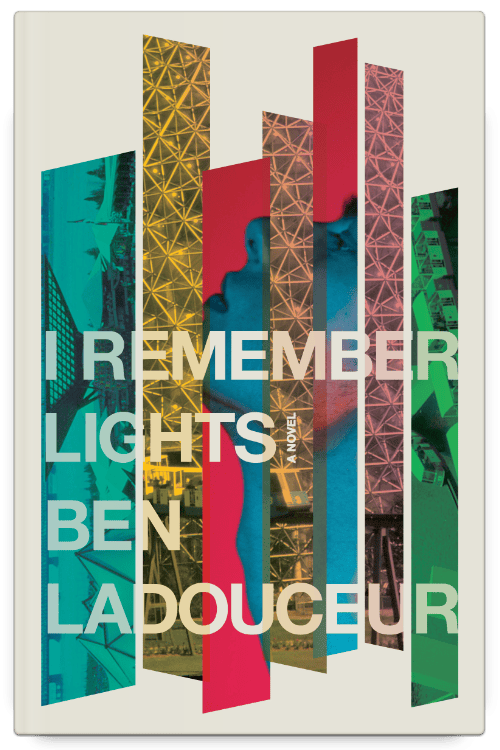
BL: I’ve always had a strong curiosity about Expo. The first time I tried to write about it was university. I tried to write an essay, but it didn’t work out, and even then, I knew it should be a novel instead, and I just hoped that I’d remember to write that novel later in life (and luckily I did remember). I wanted to get to the bottom of that curiosity I had about it. What’s so interesting? Is it, again, that limitless feeling that people seemed to have there and then? They were trying to enact a future, and they felt wholly good about it. Can you imagine such a feeling? Everything was going to be so great. You get the same sense when you read sci-fi from the ’60’s too. The way people thought: we will encounter new things, but we will be able to understand them, and we will survive through them, and we will enjoy a happiness our parents and their parents never knew or dreamed. What a treat it was, spending so much time “there” to write the book.
JF: I totally felt that during my reading! It actually made me sad, because that no longer feels like the direction things are headed in. It amplified that sense of longing surrounding Expo 67 that the book creates.
In your conversation with Steven Heighton in What the Poets Are Doing, you say, “There are poet-poets, whose books are all poetry, excepting maybe one or two forays into criticism or short fiction or some extremely autobiographical novel. There are also the traitors, who write a few poetry chapbooks or trade collections before they successfully pivot to some other written medium… I want to write everything. But my poetry demands monogamy; when I venture into other written media, poetry gives me the cold shoulder…” You could say that you’re a traitor now. Has poetry given you the “cold shoulder” since writing I Remember Lights, or would you say you’re a polygamist?
BL: I haven’t thought about that interview for a while! I reread it after Steven died in 2022, and remembered the joy of having that long email conversation with him and picking his brain. But I didn’t put it together that I have now thrown myself under the bus. I wrote a handful of poems while writing this novel, for instance when I was in a rut about the plot. It was like a release valve. Emailing with Steven years ago, I didn’t know the novelist experience from the inside. Now I see that there’s a way in which the different forms can build off each other, if you’re careful and clever about it.
JF: In that previous quote from What the Poets Are Doing, you mention poets who pivot into novels that are sometimes “extremely autobiographical.” I found the portrait of queer young adulthood that you paint in this novel to be tender and unflinching, portraying the uncomfortable, the explicit, the mundane, and everything in between. I was able to relate to a lot of the difficult feelings and awkward experiences described in the novel. Did you draw from any specific sources like your own experience to create this vivid picture of coming into one’s own as a gay man? Would you consider this novel to be at all autobiographical?
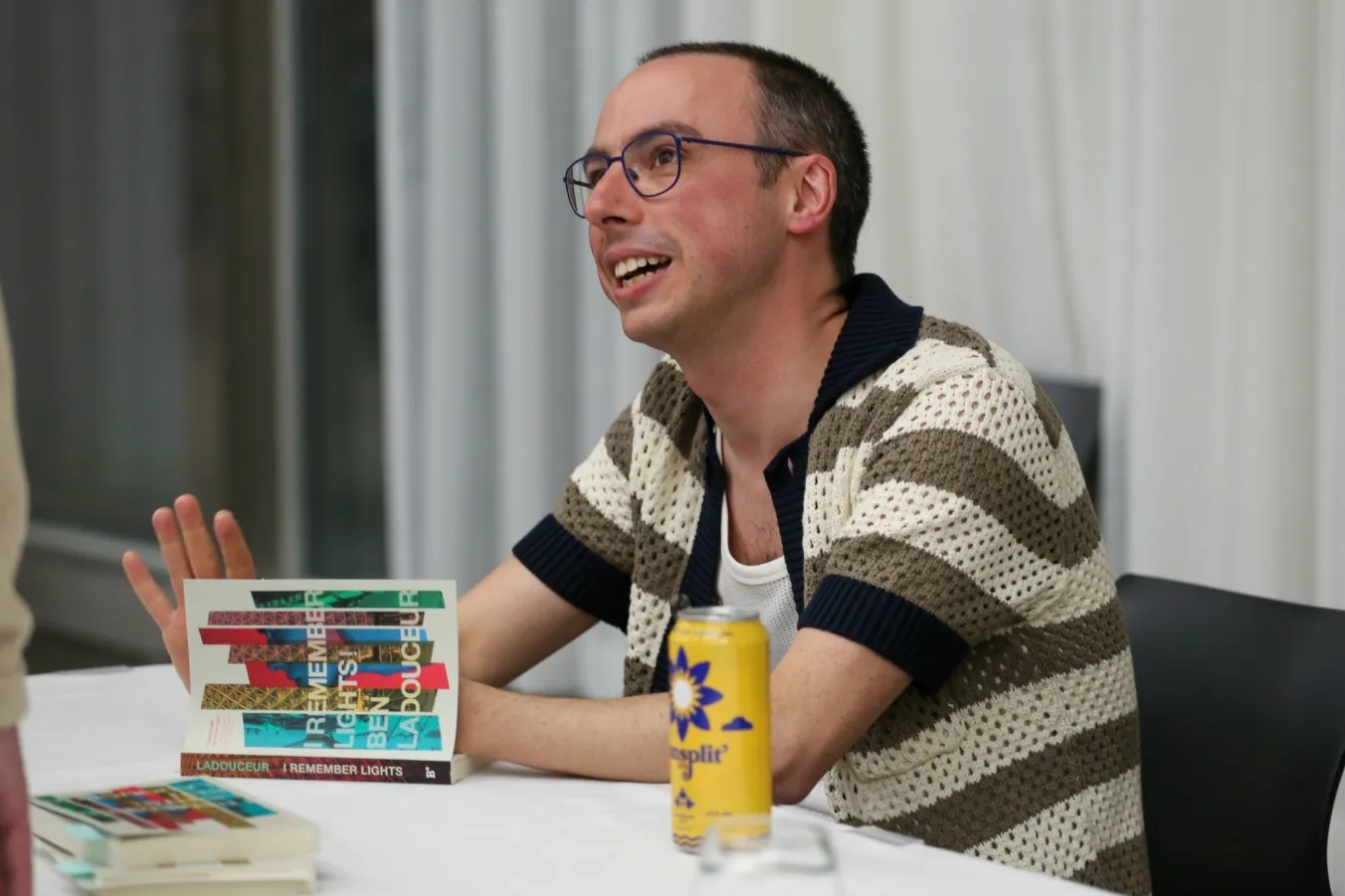
BL: A lot of the book is totally fabricated and I can’t even piece together how I so thoroughly made something up—a scene, a person, a sequence of events. Other bits are very easily traced back to my own life and living. I think it all has to do with the fact that, when I started the book, I had just read the collected stories of Norman Levine. There’s a writer who just doesn’t seem to care whether the tale seems real or fake, life-derived or fabricated. The important thing is to tell the truth—and often “what happened” is only the beginning of that.
JF: This is your first novel, and you previously published several poetry collections and chapbooks. Of course, poetry and prose are very different forms of literature that require different considerations and approaches. What have you found to be challenging about writing a novel as a poet? What has the publishing process looked like compared to that of a poetry collection or chapbook?
BL: The difference in challenges is hard to express, but I’d say the difficulty level is the same, overall. The publishing process, poetry vs. novel, has been incredibly different though, because novels are an industry and poetry books are a passion.
JF: I’ll conclude things with a (hopefully) simpler question that’s been nagging at me. What does the title I Remember Lights mean for you? I love it, and it’s stuck with me since I first saw it. It’s very wistful, evocative of something beautiful that’s destined to become a distant memory. Is this what you were going for, or does it mean something else entirely?
BL: Your descriptors here—each one of them—make me so happy. That was, in fact, exactly the idea. I’ll add—I didn’t want the title to appear in the book, but I wanted it to SOUND like it could have, so that when someone finished the book and looked at the cover and thought about the title, they’d go, “Did someone say that in the book at some point? I swear they did…”
Jasper Fleming is a writer and English undergraduate student at the University of the Fraser Valley. His works have been published in the Louden Singletree, The Cascade, and Zapta Magazine. He lives in Abbotsford, BC with his partner.